
Mary Ann Bevan: Beauty Redefined

How do you define beauty? Is there a specific set of characteristics that need to be included to call someone “beautiful”? Beauty can refer to physical attractiveness, but it can also apply to other qualities such as personality, art, or nature. Mary Ann Bevan’s life challenges conventional ideas of beauty and invites us to reconsider how we define it. Known as the "Ugliest Woman in the World," Mary Ann’s story is not just about physical appearance—it’s about resilience, strength, and sacrifice. Her journey from a nurse to a sideshow attraction reveals the societal pressures of her time, but it also highlights her unwavering love for her family and her determination to provide for them, no matter the personal cost.
Mary Ann Webster was born on December 20th, 1874 to a large working-class family with eight children. They lived on the outskirts of London and as children, the Webster youngsters, including Mary Ann were no different from any other kids in the area. When she was old enough, Mary Ann qualified to work as a nurse and the beautiful young lady soon met a farmer from Kent called Thomas and the two fell in love. As a young woman, Mary Ann was what many of us would call conventionally beautiful. She had high cheekbones, wide-set, friendly eyes, and full lips that seemed to curl up into a smile easily and frequently. Her skin was smooth and unblemished and her jawline was sharp and defined. The picture I have of her from this time shows an attractive woman who shows no indications of what will soon become of her.
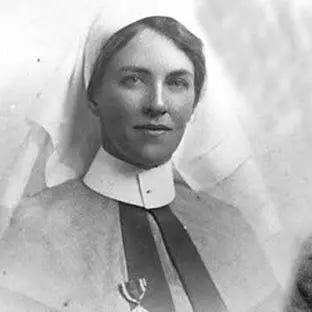
The Bevans married in 1903, and Mary Ann made for a radiant and gorgeous bride, Thomas could not keep his eyes off of her.
The marriage was happy and produced four healthy children: two sons, and two daughters. For eleven years Mr. and Mrs. Bevan made their home a place of love and then in 1914, to Mary Ann’s horror, Thomas died suddenly and unexpectedly. Mary Ann was now a young widow with four children to feed on her own.
Before Thomas died Mary Ann had begun to show signs of acromegaly, the disease that would eventually disfigure her feminine face. Acromegaly manifests as facial distortion and abnormal bone growth. She suffered from intense headaches and as the disease progressed she began to lose her eyesight too. It has been said that Thomas, until his death remained by his wife’s side, refusing to allow her disfigurement to affect their relationship.
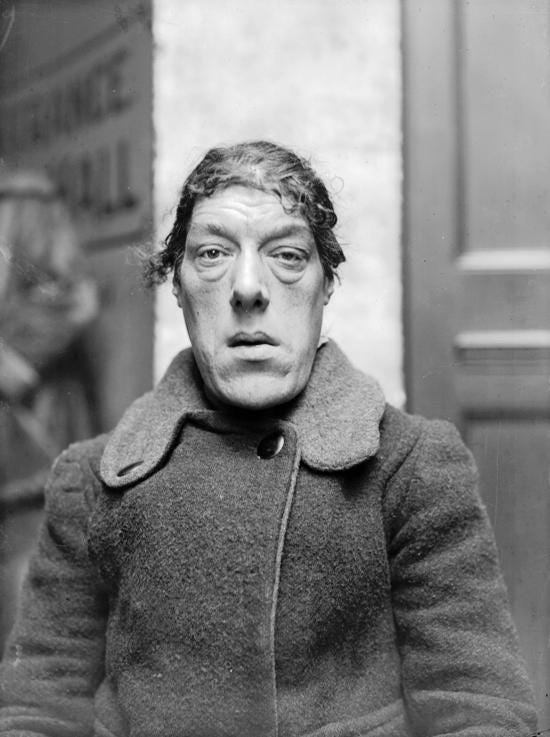
Acromegaly is a disorder that is caused by the pituitary gland overproducing a growth hormone which often begins with the sufferer’s hands and feet becoming enlarged, it also presents with an enlargement of the forehead, nose, and jaw. The sufferer’s skin may thicken and their voice deepens. Alongside these symptoms, one might also expect complications including sleep apnea, type 2 diabetes, and high blood pressure. Mary Ann was thirty-two when the disorder began to disrupt her life.
Today we understand that acromegaly is most often caused by a benign tumor, called a pituitary adenoma, and can be successfully treated with surgery, radiation, and/or medication when detected early enough. Today a patient’s prognosis is good, their life expectancy is not reduced when the disorder is treated early. However, back in Mary Ann’s day, a rare pituitary condition such as acromegaly was virtually untreatable within the limitations of 20th-century medicine. Mary Ann would have watched, helplessly, as her facial features changed and distorted beyond recognition. Without Thomas, Mary Ann was the sole parent responsible for their children and as her face became more and more disfigured she struggled to find enough work. She did odd jobs here and there but had difficulty supporting her children. One day, a farmer who Mary Ann knew, perhaps she was attempting to find work on his farm, cruelly told her that “all [she was] fit for [was] the ugly woman competition.” Mary Ann took his words to heart and actually found and entered a “Homeliest Woman” contest. She easily beat out the other 249 contestants, setting her on the path to sideshow fame. When she won that awful contest she began to get noticed by the men who owned and operated various traveling sideshows. Her physician had explained that there was nothing to be done to stop the onset of her acromegaly and that her condition would only grow worse over time so Mary Ann decided to take advantage of the only opportunity she had.
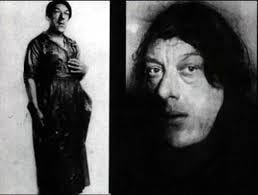
At the time “freak” shows were all the rage and many advertised attractions such as The Lion Face Lady, the Irish Giant, the Skeleton Man who was “the thinnest man on record” and the Human Trunk, a poor Russian man who had been born without arms or legs. Mary Ann began to find regular work with these fairs all around the United Kingdom.
Then, one day Mary Ann saw an ad posted by Claude Bartram, who was the European agent for the American circus, Barnum and Bailey. Claude had been traveling across the continent looking for new talent for the circus. He hadn’t found anyone or anything of note so he decided to place an ad in the newspaper. The ad read: “Wanted: Ugliest woman. Nothing repulsive, maimed or disfigured. Good pay guaranteed, and long engagement for successful applicants. Send recent photograph.”
The response to his ad was swift and robust. He was flooded with applicants but as he shifted through the responses he wasn’t seeing what he was looking for. He later told a British newspaper: “Some of the photographs were truly ugly, too ugly to present the owners of the faces to the public. One among them suggested what may sound like a paradox, the face of an ugly woman that was not unpleasant.” He was talking about Mary Ann, who had had a photograph taken specially to send in with the application. Claude went on to describe Mary Ann this way: “She was not repulsive at all. She had the kind of face one usually finds in a giant, a powerful, masculine jaw, prominent cheekbones, nose, and forehead, but she was unblemished, healthy, and strong.”
Claude’s boss, Sam Gumpertz, one of the most famous and successful sideshow promoters in history offered Mary Ann a job with Coney Island’s Dreamland Sideshow. Mary Ann accepted the job and traveled to the east coast of the United States to get to work. Dreamland visitors were invited to gawk at Mary Ann’s massive hands and feet, which looked out of place on her 5’7’ frame that carried only 154 pounds. She performed alongside other famed acts like Lionel, the Lion-Faced Man, Zip the Pinhead, and Jean Carroll, the famous Tattooed Lady.
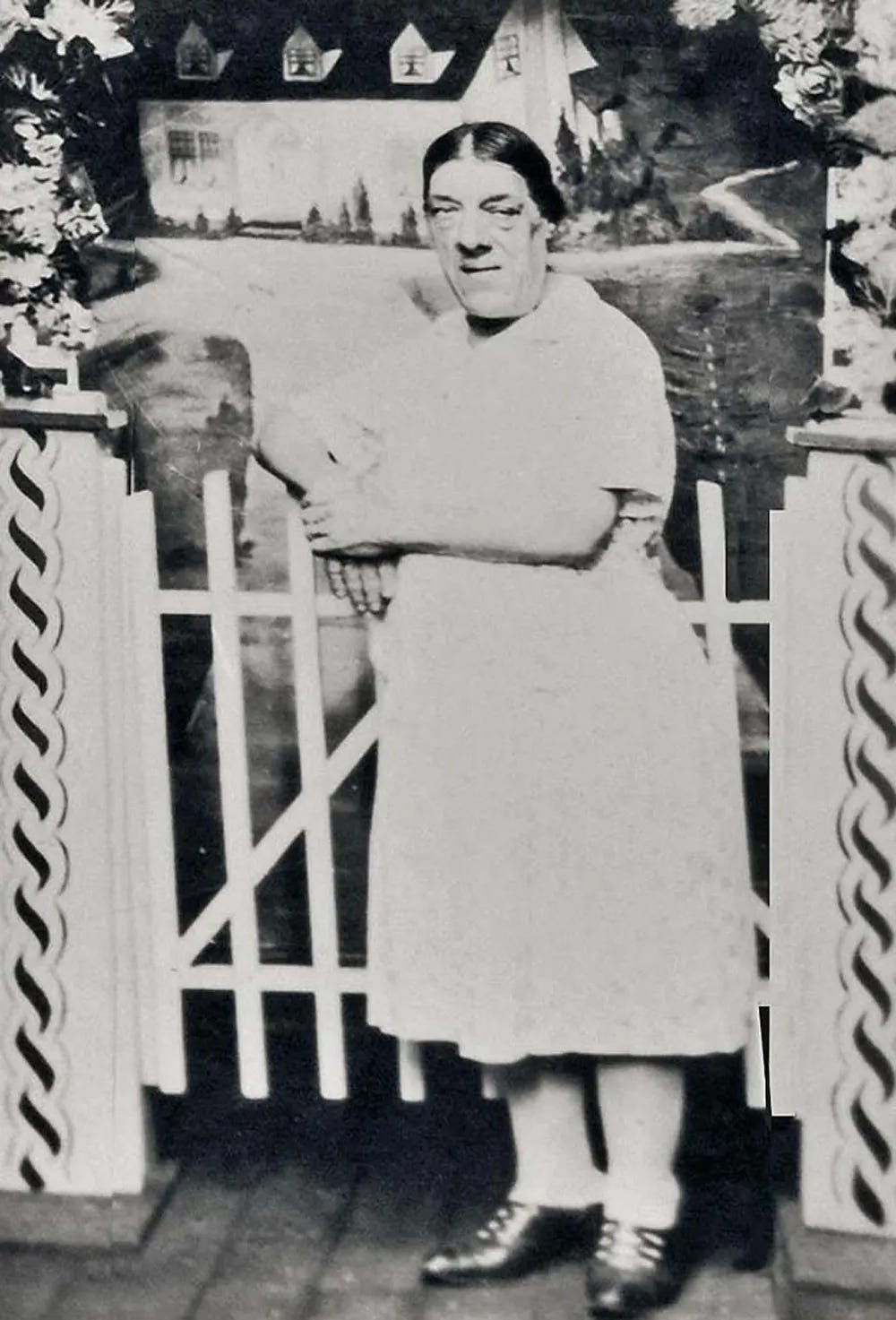
When she first landed in New York, Mary Ann’s face was plastered all over local newspapers with headlines screaming that the “Ugliest woman on earth” was in town. It must have hurt her pride so much to be gawked at, laughed at, and talked about in such a way but our Mary Ann was determined to find a way to provide for her children. She managed to smile through the indignities and sold picture postcards of herself to the cruel gawking tourists and in this way, Mary Ann achieved her goal. In the space of just two years, performing in New York earned Mary Ann £20,000, which is roughly equivalent to $1.6 million in today’s money. With money for her children’s education secure, Mary Ann continued to work for Dreamland. She occasionally made appearances for the Ringling Brothers Circus as well as Barnum & Bailey.
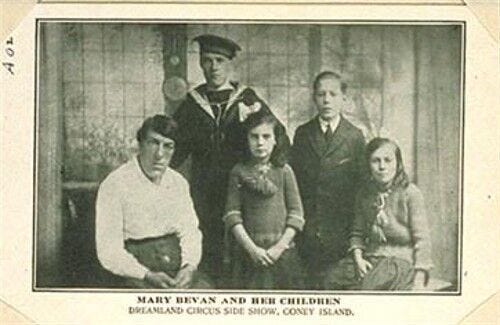
In 1929, while performing at Madison Square Garden Mary Ann met and fell in love with Andrew, a giraffe keeper. While we don’t have any records to show whether the two enjoyed a love affair, we do know that Andrew and Mary Ann were friendly with one another and that she didn’t repulse him. Once, with considerable jeopardy to her career, Mary Ann took the daring step of undergoing a makeover in an effort to enhance her appearance. A local beauty shop enlisted several professionals to work with Mary Ann, including a manicurist, masseuse and makeup artist. However, once complete the makeover failed to impress Mary Ann who reportedly looked at her reflection in a mirror and then said “I guess I’ll be getting back to work.” We don’t have any information on what Andrew thought of the transformation.
As her condition worsened and her symptoms became increasingly more painful, Mary Ann continued to work. Her vision continued to deteriorate as time went on.
In 1933 at the age of fifty-nine, Mary Ann passed away. Her body was brought back to England for her funeral and she was laid to rest in Southeast London’s Brockley and Ladywell Cemetery.
Her story may well have been left largely unknown outside of circus and sideshow historian circles if it weren’t for one last attempt to make a quick buck off of Mary Ann's misfortune.
In the year 2000, the Hallmark greeting card company bizarrely decided to mockingly put her image on a birthday card. A Dutch doctor filed a complaint, pointing out that mocking disfigurement was unspeakably disrespectful. Hallmark was forced to discontinue that particular card. The decades since Mary Ann's death demonstrate how little has changed regarding the exploitative behavior of large corporations attempting to take advantage and make a buck off the misfortune of others.